
Mosques in Ho Chi Minh City: A Muslim Traveller’s Guide to Saigon’s Masjids
 By Jimmy Nguyen, Founder & Director of Asia Travel Expert Co., Ltd.
Which mosques can you visit in Ho Chi Minh City? The easiest is Saigon Central Mosque at 66 Dong Du Street (Sai Gon ward, former District 1), a white mosque with four minarets, built in 1935 a few minutes’ walk from the Opera House and Nguyen Hue Walking Street. For a glimpse of local Cham Muslim life, go to Jamiul Islamiyah Mosque at 459B Tran Hung Dao Street (Cau Ong Lanh ward), surrounded by halal food stalls. In Saigon’s Chinatown, the pastel-blue Cholon Mosque at 641 Nguyen Trai Street was built by Tamil Muslims in the early 1930s, and further out, Jamiul Anwar Mosque anchors a Cham neighbourhood in former District 8. This guide from the Saigon Muslim Tours team covers the main mosques, their history, Friday prayers, Ramadan and how to visit respectfully, whether you are Muslim or not.

- Most central: Saigon Central Mosque, Dong Du Street, near the big riverside hotels.
- Best for local Cham life and halal breakfast: Jamiul Islamiyah Mosque, Tran Hung Dao Street.
- Most atmospheric old building: Cholon Mosque, Nguyen Trai Street, Chinatown.
- Most visited on Fridays: Saigon Central Mosque, where many visiting Muslims join the Jumu’ah prayer.
Mosques in Ho Chi Minh City at a Glance
| Mosque | Address | Built | Community | Good to know |
|---|---|---|---|---|
| Saigon Central Mosque | 66 Dong Du Street, Sai Gon ward (former District 1) | 1935 | Founded by Indian Muslims; now mixed local and visitors | Halal restaurants opposite; women’s prayer area |
| Jamiul Islamiyah Mosque | 459B Tran Hung Dao Street, Cau Ong Lanh ward (former District 1) | First built 1950, rebuilt 2003 | Cham Muslims | Halal pho in the alleys nearby |
| Cholon Mosque | 641 Nguyen Trai Street (former District 5, Cholon) | Early 1930s | Founded by Tamil Muslims | Ablution pool in the courtyard |
| Jamiul Anwar Mosque | Alley 157 Duong Ba Trac Street (former District 8) | Not published | Cham Muslims | Ramadan food market in the alley |
| Al Rahim Mosque | Nguyen Thai Binh area (former District 1) | Origins 1885, rebuilt 2009 | Malaysian and Indonesian Muslims | Often called Saigon’s oldest mosque |
| Phu Nhuan Mosque | Nguyen Van Troi Street, Phu Nhuan | Not published | Mainly Cham Muslims | Closest mosque to Tan Son Nhat Airport |
Ho Chi Minh City abolished its districts and merged its wards on 1 July 2025. Taxi and Grab drivers still use the old district names, so we give both where we can.
The Main Mosques in Ho Chi Minh City
1. Saigon Central Mosque (Dong Du Street)
Saigon’s best-known mosque stands behind a low white wall on quiet, tree-lined Dong Du Street, between Dong Khoi Street and the Saigon River. Construction began in December 1934 and the mosque opened in 1935, funded by the city’s Indian Muslim community; the textile merchant J. M. Mohamed Ismael, who had come to Saigon from Tamil Nadu, led the project. The building is small but elegant, with four slim minarets, a white façade, a shaded courtyard and an ablution pool in front of the prayer hall.
Today the congregation is a mix of Cham Muslims, long-time residents of Indian origin, expatriates and travellers from Malaysia, Indonesia, Singapore and the Middle East. There are separate prayer areas for men and women. Halal@Saigon and several other halal restaurants are just across the street.
- Address: 66 Dong Du Street, Sai Gon ward (former District 1)
- Nearby: Saigon Opera House, Nguyen Hue Walking Street, Vincom Center Dong Khoi
- Google Maps: Open Saigon Central Mosque in Google Maps
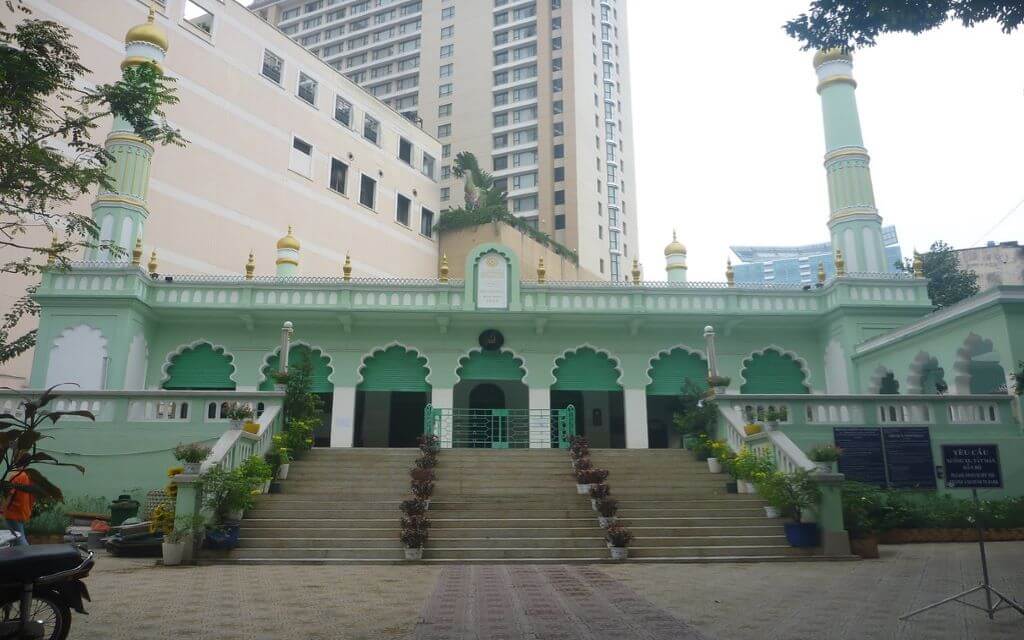
2. Jamiul Islamiyah Mosque (Tran Hung Dao Street)
On busy Tran Hung Dao Street, this green-toned mosque with its castle-like design and crescent-topped dome is the spiritual centre of one of Saigon’s oldest Cham Muslim neighbourhoods. It was first built in 1950 and has been rebuilt twice, most recently in 2003. Some locals still call it the Nancy Mosque, after the old name of the nearby area. In the evenings children come for lessons in the Arabic alphabet, Quran reading and the Cham language, and the alleys around it are full of Muslim homes and small halal eateries, including the well-known Pho Muslim.
- Address: 459B Tran Hung Dao Street, Cau Ong Lanh ward (former District 1)
- Nearby: Halal pho and banh mi in the alleys; Ben Thanh Market about 10 minutes by car
- Google Maps: Open Jamiul Islamiyah Mosque in Google Maps
3. Cholon Mosque (Nguyen Trai Street)
Easy to miss among the shophouses of Chinatown, this modest pastel-blue and white mosque was built in the early 1930s by Tamil Muslims who traded in Cholon. Its courtyard has a pool for wudu, and the calm interior is a peaceful contrast to the traffic outside. Today it serves the local Muslim community and visitors from Malaysia and Indonesia. It fits well into a Cholon walk with Binh Tay Market and the Chinese assembly halls.
- Address: 641 Nguyen Trai Street (former District 5)
- Nearby: Binh Tay Market, Cha Tam Church, Thien Hau Pagoda
- Google Maps: Open Cholon Mosque in Google Maps
4. Jamiul Anwar Mosque (Duong Ba Trac Street)
Hidden in alley 157 off Duong Ba Trac Street, south of the city centre across the canal, this mosque serves a close-knit Cham Muslim community that has lived here for more than half a century. It is a neighbourhood mosque rather than a sight, but it is lively on Fridays, and during Ramadan the alley turns into a small afternoon market selling halal cakes, snacks and dishes for iftar.
- Address: Alley 157 Duong Ba Trac Street (former District 8)
- Google Maps: Open Jamiul Anwar Mosque in Google Maps
5. Al Rahim Mosque
Al Rahim Mosque, in the old Nguyen Thai Binh area of former District 1 not far from Ben Thanh Market, is often described as the oldest mosque in Saigon, with origins traced back to 1885. It was completely rebuilt in 2009 and has traditionally served Muslims of Malaysian and Indonesian origin. Ask your guide or driver to take you there, as it is tucked away from the main streets.
6. Phu Nhuan Mosque (Nguyen Van Troi Street)
The mosque on Nguyen Van Troi Street in Phu Nhuan, on the main road between the city centre and Tan Son Nhat International Airport, serves mainly Cham Muslim families and also houses the office of the Ho Chi Minh City Muslim Community Representative Board. It is a practical place to pray on the way to or from a flight.
Visiting a Mosque in Ho Chi Minh City: Etiquette
For Muslim travellers
- You are welcome to join the five daily prayers and the Friday prayer; mosques post the prayer times at the entrance.
- Wudu facilities are available, but bring your own small towel. Saigon is hot, so a spare shirt is useful.
- Saigon Central Mosque is the most convenient for visitors staying in the centre; Jamiul Islamiyah is ideal if you want to meet the local Cham community.
- A small donation to the mosque box is appreciated and helps with upkeep.
For non-Muslim visitors
- Visit outside prayer times, and avoid Friday midday, when the mosques are full.
- Dress modestly: long trousers or skirts, covered shoulders, and a headscarf for women. Saigon Central Mosque can lend robes and scarves to visitors who need them.
- Remove your shoes before entering the prayer hall and keep your voice low.
- Do not walk in front of anyone who is praying, and ask permission before taking photos of people.
- Couples should avoid holding hands or other displays of affection inside the mosque grounds.
Friday Prayers in Ho Chi Minh City
The Friday (Jumu’ah) prayer at midday is the busiest moment of the week. Saigon Central Mosque attracts the largest and most international congregation, with many visitors from Malaysia, Indonesia, Singapore and the Gulf; Jamiul Islamiyah and the neighbourhood mosques gather mainly local Cham families. Arrive early to find space, especially at Dong Du Street, and afterwards enjoy a halal lunch at the restaurants opposite the Central Mosque or on Nguyen An Ninh Street by Ben Thanh Market.
Ramadan and Eid in Saigon
During Ramadan the mosques hold nightly tarawih prayers and many host a shared iftar at sunset. The Cham neighbourhoods on Tran Hung Dao Street and Duong Ba Trac Street come alive in the late afternoon with stalls selling food for breaking the fast. Muslim-run restaurants in the city centre generally stay open and serve iftar meals. On Eid al-Fitr and Eid al-Adha, the Eid prayer draws large crowds in the morning, so arrive early. Hotels can usually arrange an early sahur meal if you ask in advance.
Halal Food Near the Mosques
- Saigon Central Mosque: Halal@Saigon is directly opposite, and Indian and Turkish restaurants are within a short walk.
- Jamiul Islamiyah Mosque: Pho Muslim and other Cham family kitchens in the alleys off Tran Hung Dao Street, best in the morning.
- Ben Thanh area: Nguyen An Ninh Street, between the Central Mosque and Jamiul Islamiyah, has many Malay and Cham eateries.
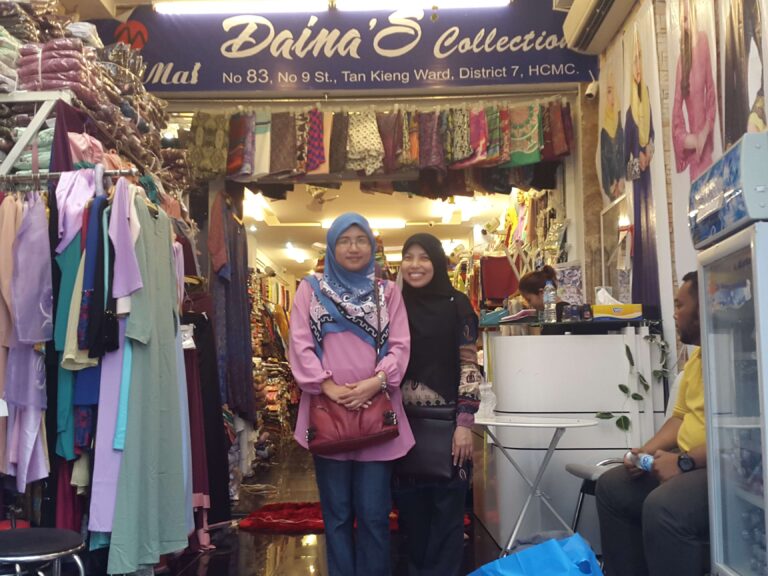
See our full guide to halal restaurants in Saigon, and if you want to shop for hijabs and prayer mats nearby, read our Saigon Muslim shopping guide.
Mosques Beyond Ho Chi Minh City
Southern Vietnam’s most devout Muslim communities live in An Giang province near the Cambodian border. Around Chau Doc and Tan Chau, Cham villages are dotted with mosques such as Mubarak and Jamiul Azhar, and a visit by boat makes a memorable extension to a Mekong Delta trip. In Hanoi, the Al-Noor Mosque on Hang Luoc Street dates from the late 19th century. To learn more about the people who worship in these mosques, read our article on Muslim people in Vietnam.
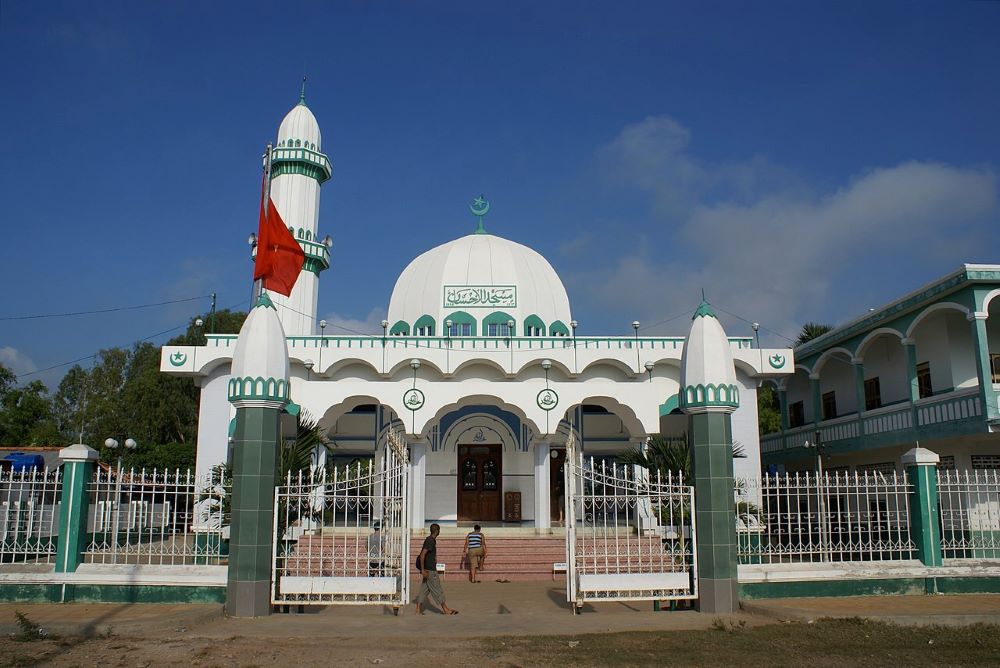
Visit Saigon’s Mosques on a Saigon Muslim Tour
Saigon Central Mosque is a sightseeing stop on our Ho Chi Minh City Muslim Tour 1 Day and our Cu Chi Tunnels & Ho Chi Minh City Muslim Tour 1 Day, and on request we can add Jamiul Islamiyah Mosque and the Cham quarter, or the Cholon Mosque on a Chinatown walk. Multi-day trips such as the Ho Chi Minh Muslim Tour 3 Days and our Ho Chi Minh Muslim tour packages leave plenty of free time, and all meals included in our tours are served at halal restaurants. Contact the Saigon Muslim Tours team to plan your visit.
Frequently Asked Questions about Mosques in Ho Chi Minh City
1. How many mosques are there in Ho Chi Minh City?
The city has a number of mosques and small prayer houses. The best known are Saigon Central Mosque, Jamiul Islamiyah, Cholon Mosque, Jamiul Anwar, Al Rahim and the mosque in Phu Nhuan.
2. What is the main mosque in Ho Chi Minh City?
Saigon Central Mosque at 66 Dong Du Street, Sai Gon ward (former District 1). Built in 1935, it is the most central and most visited mosque in the city.
3. Where can I pray Friday prayers in Saigon?
Most visitors attend Friday prayers at Saigon Central Mosque on Dong Du Street. Jamiul Islamiyah Mosque on Tran Hung Dao Street also holds Friday prayers with the local Cham community. Arrive early, as the halls fill quickly.
4. Can non-Muslims visit mosques in Ho Chi Minh City?
Yes, outside prayer times. Dress modestly, remove your shoes, keep your voice low and ask before photographing people. Women should cover their hair.
5. Is there a women’s prayer area at Saigon Central Mosque?
Yes. Saigon Central Mosque has a separate prayer area for women, and robes and scarves can be borrowed by visitors who need them.
6. Is there an entrance fee for mosques in Saigon?
No. Entry is free; a small donation to the mosque is welcome.
7. When was Saigon Central Mosque built?
Construction began in December 1934 and the mosque was completed in 1935, funded by the Indian Muslim community of Saigon.
8. Which mosque is closest to Ben Thanh Market?
Saigon Central Mosque at 66 Dong Du Street is about 15 minutes’ walk away. Jamiul Islamiyah Mosque on Tran Hung Dao Street is a short Grab ride.
9. Which mosque is closest to Tan Son Nhat Airport?
The mosque on Nguyen Van Troi Street in Phu Nhuan is on the main road between the airport and the city centre. Inside the international terminal, the paid Jasmine Halal Lounge has prayer rooms.
10. Where do Cham Muslims pray in Saigon?
Mainly at Jamiul Islamiyah Mosque on Tran Hung Dao Street and Jamiul Anwar Mosque in alley 157 Duong Ba Trac Street, both in Cham neighbourhoods, as well as at the city’s other mosques.
11. Is there halal food near Saigon Central Mosque?
Yes. Halal@Saigon is directly opposite the mosque on Dong Du Street, and the halal restaurants of Nguyen An Ninh Street are about 15 minutes’ walk away.
12. What should I wear to visit a mosque in Vietnam?
Loose clothing that covers arms and legs. Women should bring a headscarf; men should wear long trousers. Shoes are removed before entering the prayer hall.
13. Is Ramadan observed in Ho Chi Minh City?
Yes. Mosques hold tarawih prayers and iftar gatherings, the Cham neighbourhoods have food stalls for breaking the fast, and Muslim-run restaurants serve iftar meals.
14. Can I visit a mosque on a Saigon Muslim Tours city tour?
Yes. Saigon Central Mosque is a sightseeing stop on our Ho Chi Minh City Muslim day tours, and we can add Jamiul Islamiyah Mosque or the Cholon Mosque on request.