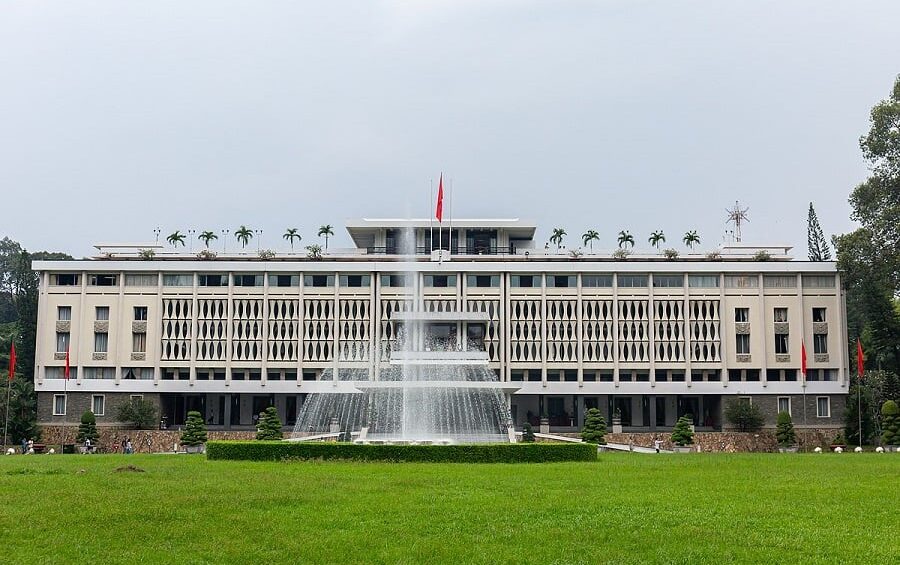
Independence Palace (Reunification Palace), Saigon: History, 2026 Tickets and What to See
 By Jimmy Nguyen, Founder & Director of Asia Travel Expert Co., Ltd.
What is Independence Palace, and is it worth visiting? Independence Palace, also called Reunification Palace (Dinh Doc Lap), is the 1960s presidential palace of South Vietnam at 135 Nam Ky Khoi Nghia Street (former District 1, now Ben Thanh ward), where the Vietnam War ended on 30 April 1975 when tanks broke through its gates. Today it is a Special National Monument and one of Saigon’s essential sights: you can walk through state rooms preserved as they were in 1975, climb to the rooftop helipad and explore the war command bunker underneath. It opens daily from 7:00 to 18:00, and since 1 May 2026 a full ticket costs 80,000 VND (about 3 USD). Allow 1.5 to 2 hours. Below, the Saigon Muslim Tours team explains the palace’s story, what to see, the new ticket and photography rules, and where to find halal food and a mosque nearby.
- Why visit: it is the place where the war ended and Vietnam was reunified, and the building itself is a landmark of 1960s Vietnamese modernist architecture.
- Don’t miss: the Conference Hall, the Credentials Presentation Room, the rooftop with its helicopter, and the basement bunker with its original maps and radios.
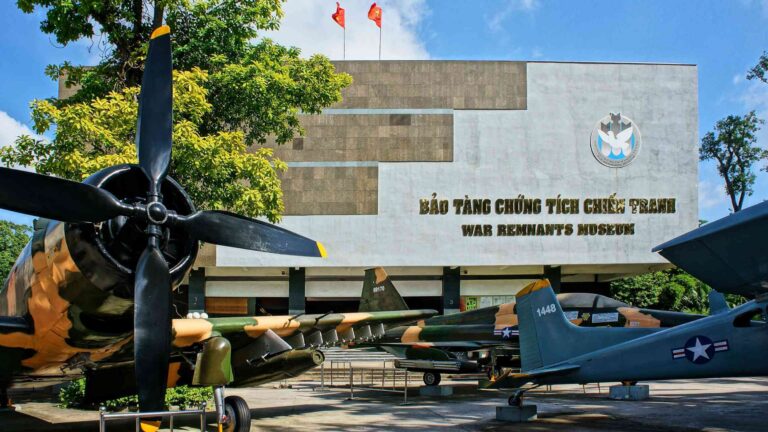
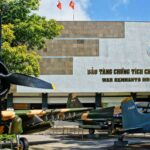
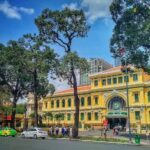
- Easy to combine: the War Remnants Museum is a 10-minute walk away, and Saigon Central Post Office about 10 minutes on foot.
- Dress code: no shorts or sleeveless tops, which suits modest Muslim dress perfectly.
Independence Palace at a Glance
| Item | Details |
|---|---|
| Address | 135 Nam Ky Khoi Nghia Street, Ben Thanh ward (former District 1), Ho Chi Minh City; second gate at 106 Nguyen Du Street |
| Opening hours | Daily 7:00–18:00; tickets at the Nguyen Du gate are sold only 8:00–16:00 |
| Closed days | Open every day, including weekends, holidays and Tet, except on special state occasions announced in advance |
| Ticket price (from 1 May 2026) | Palace + exhibition house: 80,000 VND (about 3 USD) per adult; palace only: 40,000 VND (about 1.5 USD) |
| Reduced tickets | Seniors 60+ and Vietnamese university students: 40,000 VND; children 6 to under 16: 20,000 VND (palace only: 10,000 VND) |
| Time needed | 1.5–2 hours; 2.5 hours with the exhibition house |
| Dress code | Polite clothing; shorts and sleeveless shirts are not allowed |
| Photography | Souvenir photos allowed in designated areas, no flash indoors; a fee applies to dedicated cameras and professional shoots (see below) |
| Children | Family-friendly; the rooftop helicopter and the tanks on the lawn are favourites with children |
Hours and prices are taken from the official Independence Palace website and apply in 2026. Online tickets with a QR code are also sold through the palace’s own ticketing website.

The Story of Independence Palace
From Norodom Palace to Independence Palace (1868–1962)
The site was first chosen by the French, who laid the cornerstone of a grand residence for the Governor of Cochinchina in 1868. Completed in the early 1870s and named Norodom Palace after the boulevard in front of it, it later housed the Governors-General of French Indochina. Japanese forces took it over briefly in 1945, and after the French withdrew under the 1954 Geneva Accords the building passed to President Ngo Dinh Diem of the Republic of Vietnam, who renamed it Independence Palace.

A new palace by Ngo Viet Thu (1962–1966)
On 27 February 1962 two dissident air force pilots bombed the old palace, destroying its left wing. Diem had the building demolished and commissioned a new one from Ngo Viet Thu, a Vietnamese architect who had won the Grand Prix de Rome in 1955. Construction started on 1 July 1962. Diem was killed in a coup in November 1963 and never saw it finished; the new palace was inaugurated on 31 October 1966 and became the home and office of President Nguyen Van Thieu.
Ngo Viet Thu blended modernism with Vietnamese traditions. The building has more than 100 rooms over a basement, ground floor, three main floors, two mezzanines and a rooftop terrace, with a usable floor area of about 20,000 square metres. Its best-known feature is the façade screen of concrete “bamboo segments”, which lets in breezes and light while shading the rooms from the tropical sun.
30 April 1975: the end of the war
On 8 April 1975 a South Vietnamese air force pilot, secretly working for the North, dropped bombs on the palace from an F-5E jet; the spots where they struck are marked on the roof. Three weeks later, on the morning of 30 April 1975, tanks of the North Vietnamese army smashed through the palace gates. President Duong Van Minh, who had been in office for only two days, announced the surrender of the South Vietnamese government, and the war was over.
In November 1975 the palace hosted the conference that prepared the political reunification of North and South, which is why it is also known as Reunification Palace or Reunification Hall (Hoi truong Thong Nhat). It was recognised as a national historical site in 1976, opened to tourists in 1990 and ranked a Special National Monument in 2009. In 2024 it welcomed nearly 1.5 million visitors.
What to See at Independence Palace
Visitors follow a marked route through the building, from the ground floor up to the roof and then down into the basement. These are the rooms and sights our guides never skip.
1. The front lawn and the tanks
The wide lawn, fountain and tree-lined drive make a fine first view of the palace. Near the gate stand two tanks bearing the numbers 390 and 843, the numbers of the two tanks that entered the grounds on 30 April 1975. The original vehicles, declared National Treasures in 2012, are preserved in military museums.

2. The Conference Hall
On the ground floor, this long hall was used for state meetings and later for the 1975 reunification conference. It is one of the most photographed rooms in the palace.
3. The Cabinet Room and the Banquet Hall
The Cabinet Room, with its long meeting table, is where the government of South Vietnam met, and the Banquet Hall next door was used for state dinners and receptions.
4. The Credentials Presentation Room
On the first floor, foreign ambassadors presented their credentials to the president in this formal room. Its centrepiece is a huge lacquer artwork showing scenes from Vietnam’s history, made of dozens of panels.
5. The President’s office and the family quarters
The president’s and vice-president’s reception rooms, the president’s office, and the private living quarters on the upper floors show how the head of state and his family lived in the 1960s and 1970s, with original furniture, ceramics and gifts from foreign leaders.

6. The rooftop and the helicopter
On the top floor are the entertainment rooms, including a small cinema, and on the roof a helipad with a UH-1 helicopter of the type used by the president. The roof terrace also offers fine views over the palace grounds and Le Duan Boulevard.
7. The basement command bunker
Many visitors find the basement the most memorable part of the visit. Behind thick concrete walls are the war command room, telecommunications centre, cipher room and the president’s emergency bedroom, still filled with maps, telephones and radio equipment from 1975.
8. The exhibition house: “From Norodom Palace to Independence Palace”
Included in the full 80,000 VND ticket, this exhibition tells the story of the site from 1868 to 1966, with old photographs and objects from the French palace. It is worth 20–30 minutes if you enjoy history.
9. Art and craft treasures
The palace holds more than 3,700 artefacts and artworks, including fine Vietnamese lacquer and oil paintings, relief sculptures and ceramics. Look out for the “Bountiful Harvest” relief and the painting of Khue Van Cac, the pavilion of the Temple of Literature in Hanoi.
Opening Hours, Tickets and Rules (2026)
- Opening hours: daily from 7:00 to 18:00. At the main gate (135 Nam Ky Khoi Nghia) tickets are sold from 7:00 to 18:00; at the side gate (106 Nguyen Du) from 8:00 to 16:00.
- Full ticket (palace + exhibition house): 80,000 VND for adults; 40,000 VND for seniors aged 60+ and Vietnamese university students; 20,000 VND for children aged 6 to under 16.
- Palace-only ticket: 40,000 VND for adults; 10,000 VND for children aged 6 to under 16.
- Electric car: 25,000 VND per person per ride, useful for older travellers.
- Audio guide: available to rent at the information desk in ten languages.
- Dress: shorts and sleeveless shirts are not permitted.
- Bags: bulky luggage, weapons and pets may not be taken inside.
- Cameras: from 1 August 2026 the palace charges a service fee of 500,000 VND per dedicated camera, and separate fees for professional photo shoots. The palace management says the rule targets professional photography; normal snapshots on your phone are part of an ordinary visit. If you carry a separate camera, ask at the ticket desk.
On our private tours, tickets are included and your guide takes care of them.
How to Get to Independence Palace
- By Grab or taxi: 5–10 minutes from most hotels in the former District 1. Ask for “Dinh Doc Lap”.
- On foot: about 15 minutes from Ben Thanh Market, 10 minutes from Saigon Central Post Office and Notre-Dame Cathedral, and 10 minutes from the War Remnants Museum.
- By metro: Ben Thanh station on Metro Line 1 is the nearest stop, about 15 minutes away on foot.
Open Independence Palace in Google Maps
Best Time to Visit and Insider Tips
- Arrive at 7:00. The first hour is the quietest and coolest, before tour groups arrive.
- Avoid the big anniversaries. Around 30 April and 2 September the palace is very busy, and it can close for state events; check the official website if your visit falls on these dates.
- Follow the route. The marked circuit leads you upwards to the roof and then down to the basement; do not leave before the bunker.
- Wear comfortable shoes. There are many stairs, and the building is large.
- Carry water. The grounds are large and sunny, and Saigon is hot all year.
- Pair it well. Visit the War Remnants Museum first and the palace second, or combine the palace with the Post Office and Notre-Dame Cathedral on a walking route.
Tips for Muslim Travellers
Halal food nearby
- Nguyen An Ninh Street, by Ben Thanh Market (Ben Thanh ward): about 15 minutes on foot, with several Muslim-run eateries for halal pho, rice and banh mi.
- The Daun Restaurant, 48 Le Lai Street (Ben Thanh ward): halal Vietnamese food, close to Ben Thanh Market.
- Kampung Pandan, 53 Thu Khoa Huan Street (Ben Thanh ward), for Malaysian halal dishes, and Halal@Saigon, 31 Dong Du Street (Sai Gon ward), opposite Saigon Central Mosque.
See our full guide to halal restaurants in Saigon for ratings and opening hours.
The nearest mosque
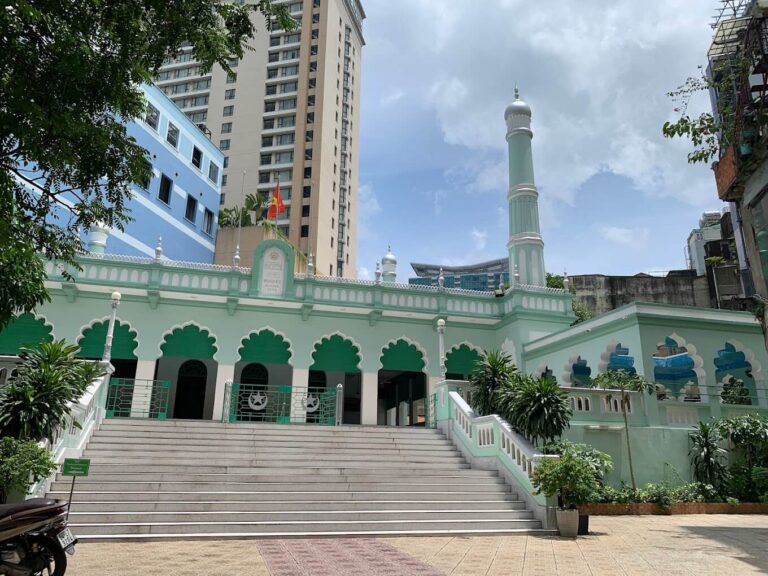
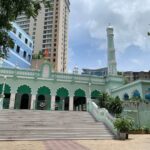
Saigon Central Mosque, 66 Dong Du Street, Sai Gon ward (former District 1), is the nearest mosque, about 1.5 km away or 5–10 minutes by car. There is no prayer room open to visitors inside the palace. For other mosques, read our guide to mosques in Ho Chi Minh City.
Dress
The palace’s dress rule, covered shoulders and no shorts, matches modest Muslim clothing, so you will be comfortable. Light, breathable fabrics are best in Saigon’s heat.
Visit Independence Palace on a Saigon Muslim Tour
Independence Palace is a highlight of many of our private tours, all with an English-speaking guide, private air-conditioned transport and certified-halal meals at halal restaurants:
- Ho Chi Minh City Muslim Tour 1 Day: the palace, the War Remnants Museum, the colonial landmarks, Saigon Central Mosque and Ben Thanh Market.
- Cu Chi Tunnels & Ho Chi Minh City Muslim Tour 1 Day: the war story from the tunnels to the palace in one day.
- Ho Chi Minh Muslim Tour 4 Days and Ho Chi Minh Muslim Tour 5 Days: Saigon with the Mekong Delta and Cu Chi Tunnels at an easy pace.
- Ho Chi Minh – Hanoi Muslim Tour Package 8 Days and Vietnam Muslim Tour Package 12 Days: from Saigon to Hanoi and Halong Bay.
See all Ho Chi Minh Muslim day trips and Vietnam Muslim tour packages, or contact Saigon Muslim Tours and we will plan a private itinerary around your dates.
Frequently Asked Questions about Independence Palace
1. Is Independence Palace the same as Reunification Palace?
Yes. Dinh Doc Lap is called both Independence Palace and Reunification Palace (or Reunification Hall), after the 1975 conference on national reunification held there.
2. Where is Independence Palace?
The main gate is at 135 Nam Ky Khoi Nghia Street, Ben Thanh ward (former District 1), Ho Chi Minh City. There is a second gate at 106 Nguyen Du Street.
3. What are the Independence Palace opening hours?
It is open every day from 7:00 to 18:00, including weekends and Tet, except on special occasions announced in advance.
4. How much is the Independence Palace ticket in 2026?
From 1 May 2026, the full ticket (palace and exhibition house) is 80,000 VND for adults, 40,000 VND for seniors and Vietnamese university students, and 20,000 VND for children aged 6 to under 16. A palace-only ticket costs 40,000 VND for adults.
5. How long does it take to visit Independence Palace?
Plan 1.5 to 2 hours for the palace and grounds, or about 2.5 hours if you also visit the exhibition house.
6. Is there a dress code at Independence Palace?
Yes. Visitors should dress politely; shorts and sleeveless shirts are not allowed.
7. Can I take photos at Independence Palace?
Yes, souvenir photos are allowed in designated areas, without flash indoors. Since 1 August 2026 a fee of 500,000 VND per dedicated camera applies, aimed mainly at professional photography.
8. Are the tanks at Independence Palace the original ones?
The tanks on the lawn carry the numbers 390 and 843 of the tanks that entered the palace on 30 April 1975. The original tanks are National Treasures kept in military museums.
9. What happened at Independence Palace on 30 April 1975?
North Vietnamese army tanks broke through the gates, and South Vietnam’s last president, Duong Van Minh, announced the surrender. The day marks the end of the Vietnam War and the start of reunification.
10. Who designed Independence Palace?
The architect was Ngo Viet Thu, winner of the Grand Prix de Rome in 1955. The palace was built from 1962 and inaugurated on 31 October 1966.
11. Is Independence Palace good for children?
Yes. Children enjoy the tanks, the helicopter on the roof and the bunker. Children aged 6 to under 16 pay a reduced ticket.
12. Is there halal food near Independence Palace?
Yes. The halal eateries on Nguyen An Ninh Street by Ben Thanh Market are about 15 minutes on foot, and Dong Du Street, by Saigon Central Mosque, is about 5–10 minutes by car.
13. Where is the nearest mosque to Independence Palace?
Saigon Central Mosque, at 66 Dong Du Street, Sai Gon ward, is the nearest mosque, about 5–10 minutes away by car.
14. Can I visit Independence Palace and the War Remnants Museum together?
Yes. They are about 10 minutes apart on foot, and together take around half a day. Both are included in our Ho Chi Minh City Muslim Tour 1 Day.