Muslim People in Vietnam 2026: Who Are Vietnamese Muslims? Cham Islam, Bani & Communities
 By Jimmy Nguyen, Founder & Director of Asia Travel Expert Co., Ltd.
Last updated: October 2026. Figures are the latest official data available in October 2026 (the 1 July 2024 survey of ethnic minorities, the Ministry of Ethnic and Religious Affairs and the 2019 census), cross-checked against the other sources listed at the end of this guide.
Who are the Muslim people of Vietnam? Most Vietnamese Muslims are Cham, descendants of the kingdom of Champa that ruled Vietnam’s central coast for more than a thousand years. The Cham number about 173,000 people (173,135 in the official survey of ethnic minorities on 1 July 2024) and follow three traditions: Cham Muslims, who practise Sunni Islam like Muslims in Malaysia and Indonesia; Cham Bani, who follow a local form of Islam; and Cham Ahier, who keep a Hindu-influenced faith. Together with Muslims of Indian and Malay descent, a small number of ethnic Vietnamese converts and foreign residents, Vietnam has more than 80,000 Muslims, mostly in An Giang, Ho Chi Minh City and the south-central coast.
Vietnamese Muslims at a Glance (2026)
| Topic | Key facts |
|---|---|
| Who they are | Mainly the Cham people, plus Muslims of Indian and Malay descent, a small number of ethnic Vietnamese (Kinh) Muslims and foreign residents |
| Cham people (1 July 2024 survey) | 173,135 (178,948 in the 2019 census) |
| Followers of Islam (2019 census, the last count to record religion) | 70,934 |
| Latest official religious-affairs figures | More than 80,000: about 30,000 Sunni Muslims and about 50,000 Cham Bani |
| Places of worship | 89 (64 Sunni mosques and prayer houses, 25 Bani places of worship) |
| Main areas | An Giang (Chau Doc), Ho Chi Minh City, Tay Ninh, Dong Nai; Bani in Khanh Hoa and Lam Dong |
| Islamic school of law | Shafi’i (Sunni Cham), as in Malaysia and Indonesia |
Cham Muslims, Cham Bani and Cham Ahier: What Is the Difference?
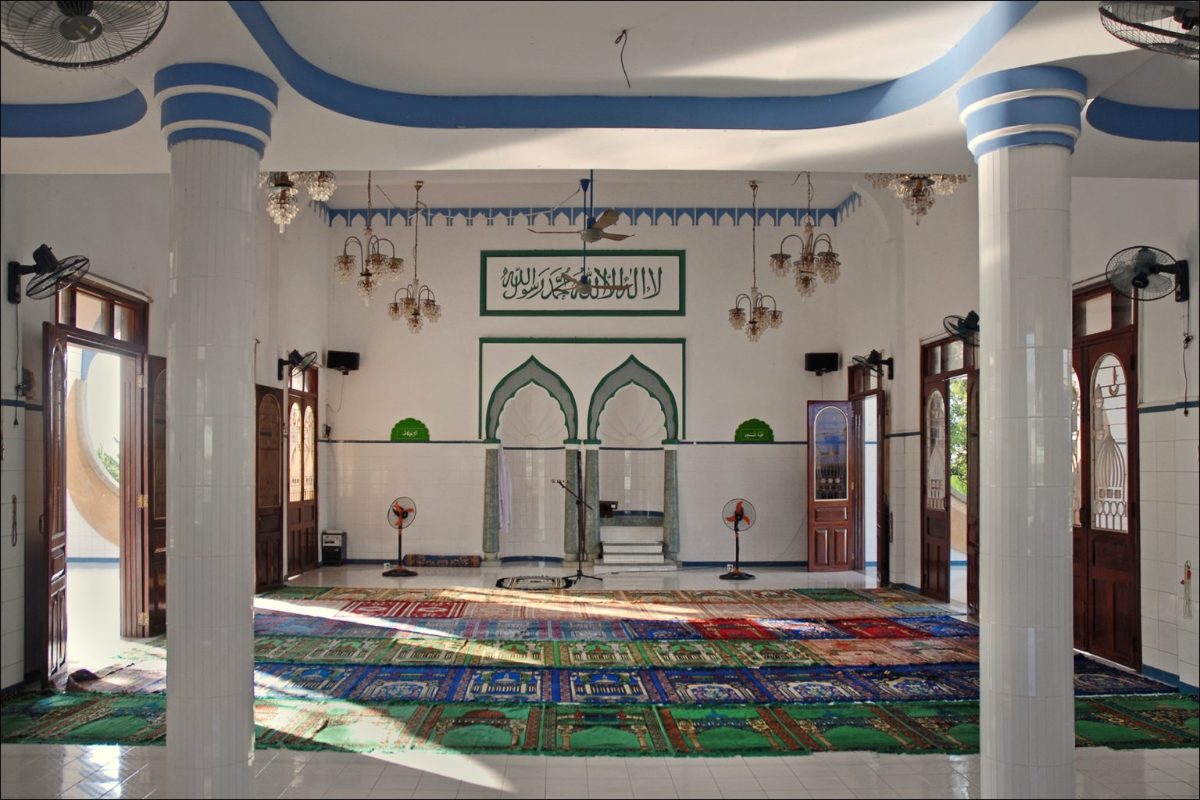
The Cham share one language and culture but three religious traditions:
| Tradition | Faith | Where | Prayer | Fasting | Main festival |
|---|---|---|---|---|---|
| Cham Muslims (Islam) | Sunni Islam | An Giang, Ho Chi Minh City, Tay Ninh, Dong Nai | Five daily prayers in mosques | Ramadan, whole community | Eid al-Fitr and Eid al-Adha |
| Cham Bani | Local Islam blended with Cham custom | Coastal Khanh Hoa and Lam Dong (former Ninh Thuan and Binh Thuan) | Rituals led by clergy (Acar) in the Bani mosque (thang mưgik) | Ramưwan, observed mainly by the clergy | Ramưwan |
| Cham Ahier | Cham Brahmanism (Hindu-influenced) | Coastal Khanh Hoa and Lam Dong | Rituals at Cham towers and temples | No | Kate festival at the Cham towers |
Cham Muslims (sometimes called Cham Islam) live mainly in the Mekong Delta and Ho Chi Minh City and are closely linked to the wider Muslim world. Cham Bani live on the south-central coast and keep a tradition in which Islamic practice is carried out by the clergy on behalf of the community. The Cham Ahier, who are not Muslim, share many festivals and family customs with the Bani.
A Short History of Islam among the Vietnamese Cham
1. Champa and the first Muslim traders
Champa traded with Arab, Persian and Malay merchants for centuries. Two Arabic tombstones from the Phan Rang area, dated 1038–1039, were long cited as proof of an early Muslim community, but historians now dispute their origin, and there is no firm evidence that many Cham were Muslim before the 15th to 16th centuries.
2. After the fall of Vijaya (1471)
In 1471 the Cham capital of Vijaya, in today’s Binh Dinh area, fell to Dai Viet. Contact with the Malay world grew, and Islam spread among the Cham. On the southern coast, in the principality of Panduranga (Phan Rang and Phan Thiet), Islam merged with Cham custom to become the Bani tradition.
3. The end of Champa and the Mekong Delta communities
Panduranga was fully absorbed into Vietnam in 1832. Many Cham had already moved to Cambodia, and Cham Muslims from Cambodia settled along the Hau River near Chau Doc, where Masjid Mubarak was founded in 1750. These communities follow mainstream Sunni Islam.
4. Indian and Malay Muslims in Saigon
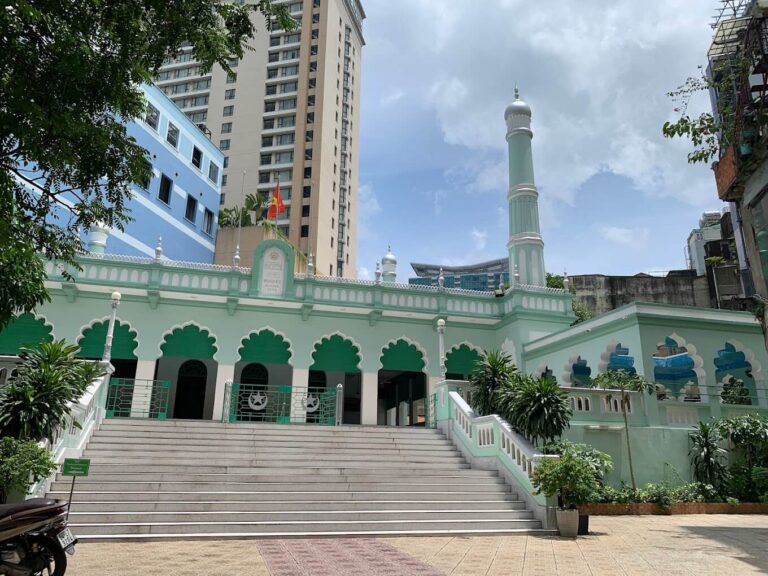
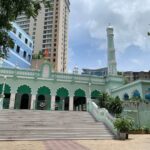
Under French rule, Muslim traders from South India and the Malay world settled in Saigon. Indian Muslims built the Saigon Central Mosque on Dong Du Street, completed in 1935. Today the city’s Muslim community is mainly Cham.
5. Muslims in Vietnam today
Islam is one of Vietnam’s 16 officially recognised religions. Muslim communities are represented by Islamic community boards in An Giang, Ho Chi Minh City and Tay Ninh, and the Bani by the Council of Cham Bani dignitaries.
Where Do Vietnamese Muslims Live?
| Province or city | Community | Muslims (latest official) | Cham people (1 July 2024) | Places of worship |
|---|---|---|---|---|
| An Giang (incl. former Kien Giang) | Cham Muslims along the Hau River: Chau Giang, Chau Phong, Da Phuoc, An Phu | 11,167 (2020) | 9,611 | 28 |
| Ho Chi Minh City (incl. former Binh Duong and Ba Ria-Vung Tau) | Cham Muslims, Indian-descended Muslims, foreign residents | More than 10,000 (2026) | 7,450 | 14 |
| Tay Ninh (incl. former Long An) | Cham Muslims | Not published separately | About 6,350 | 7 (6 mosques, 1 prayer house) |
| Dong Nai (incl. former Binh Phuoc) | Cham Muslims | 2,838 | 9,214 | 2 |
| Khanh Hoa (former Ninh Thuan) | Cham Bani and Cham Ahier (Brahmanist) | About 50,000 Bani nationwide | 62,220 | 25 Bani places of worship nationwide |
| Lam Dong (former Binh Thuan) | Cham Bani and Cham Ahier (Brahmanist) | Included in the Bani total above | 49,037 | Included above |
| Dak Lak and Gia Lai (former Phu Yen and Binh Dinh) | Cham H’roi, who mostly keep traditional beliefs rather than Islam | Not a Muslim community | 28,432 | – |
| Hanoi | Mostly foreign residents and a small Vietnamese Muslim community | About 650 | Not recorded | 1 (Al-Noor Mosque) |
Province names follow Vietnam’s provincial merger of 1 July 2025; Cham population figures from the 1 July 2024 survey are added up within the new provincial borders. The Cham figures come from the official survey of Vietnam’s 53 ethnic minorities (Ministry of Ethnic and Religious Affairs and National Statistics Office, published July 2025) and are sample-based estimates. No province has published a newer count of Muslims than the year shown; the Ho Chi Minh City figure was given at the city’s Muslim community meeting in February 2026.
Culture and Daily Life of Vietnamese Muslims
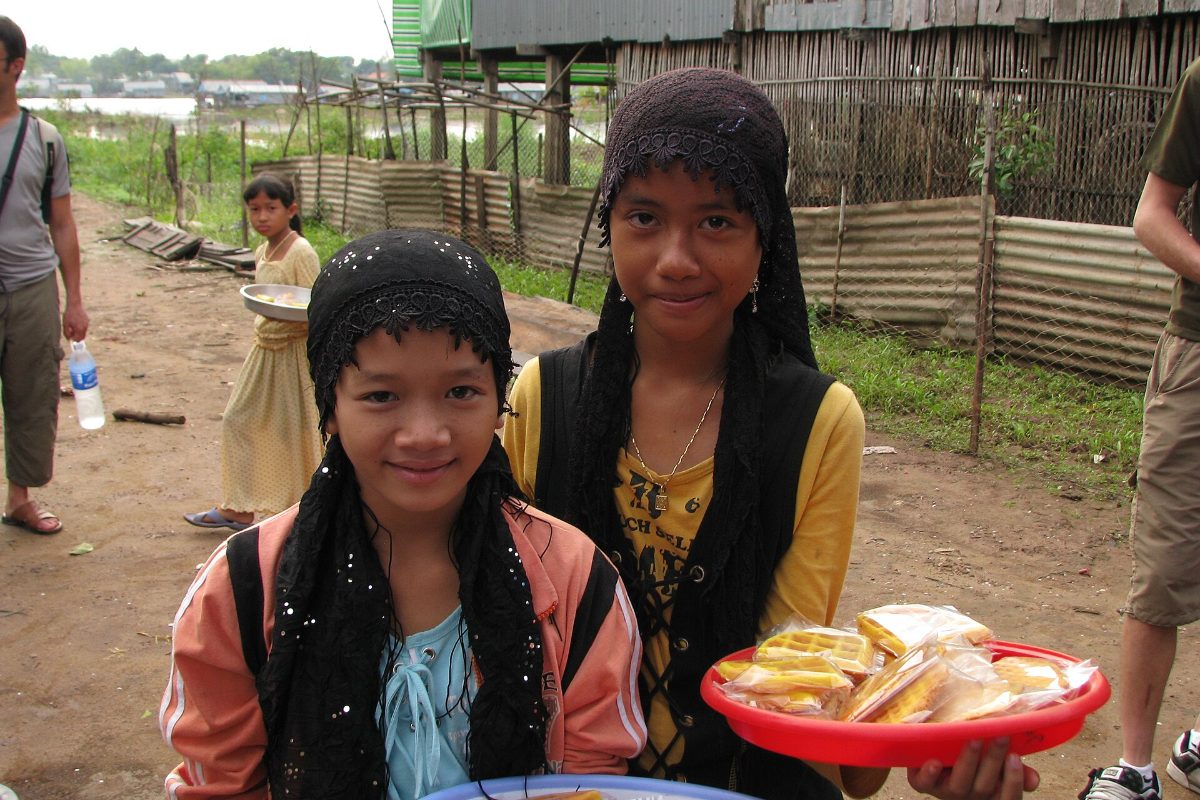
- Language: Cham and Vietnamese at home and school; Arabic for the Quran. Coastal Cham keep the traditional Akhar Thrah script.
- Names: some Cham Muslims use an Islamic name in the community alongside the name on their Vietnamese identity papers.
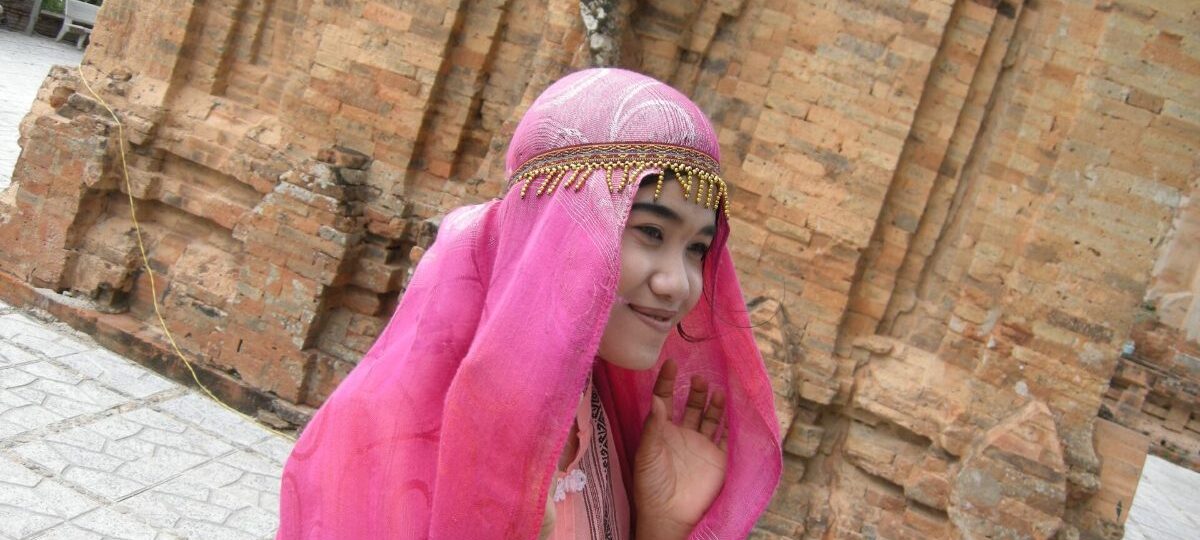
- Dress: women often wear a headscarf and long skirt; men wear a sarong and cap (kopiah) to the mosque.
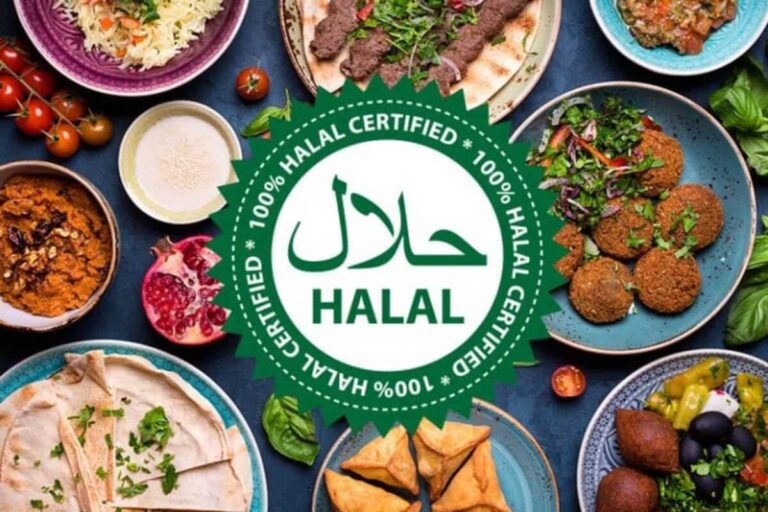
- Food: Cham Muslim cooking is halal and based on beef, chicken and fish, with curries and the beef sausage tung lo mo of An Giang. This is why the Cham neighbourhoods are the best places to find halal food outside the big cities.
- Crafts: Cham villages near Chau Doc are known for brocade weaving, and many families live in wooden stilt houses.
- Religious year: Cham Muslims observe Ramadan and the two Eids; the Bani observe Ramưwan; the Cham Ahier celebrate the Kate festival at the Cham towers.
Visiting Vietnamese Muslim Communities
- Chau Doc, An Giang: take a boat across the Hau River to the Cham villages of Chau Giang and Chau Phong to see the mosques, stilt houses and weaving.
- Ho Chi Minh City: visit the Saigon Central Mosque on Dong Du Street and, during Ramadan, the iftar food market around Jamiul Anwar Mosque on Duong Ba Trac Street. See our guide to the mosques of Ho Chi Minh City.
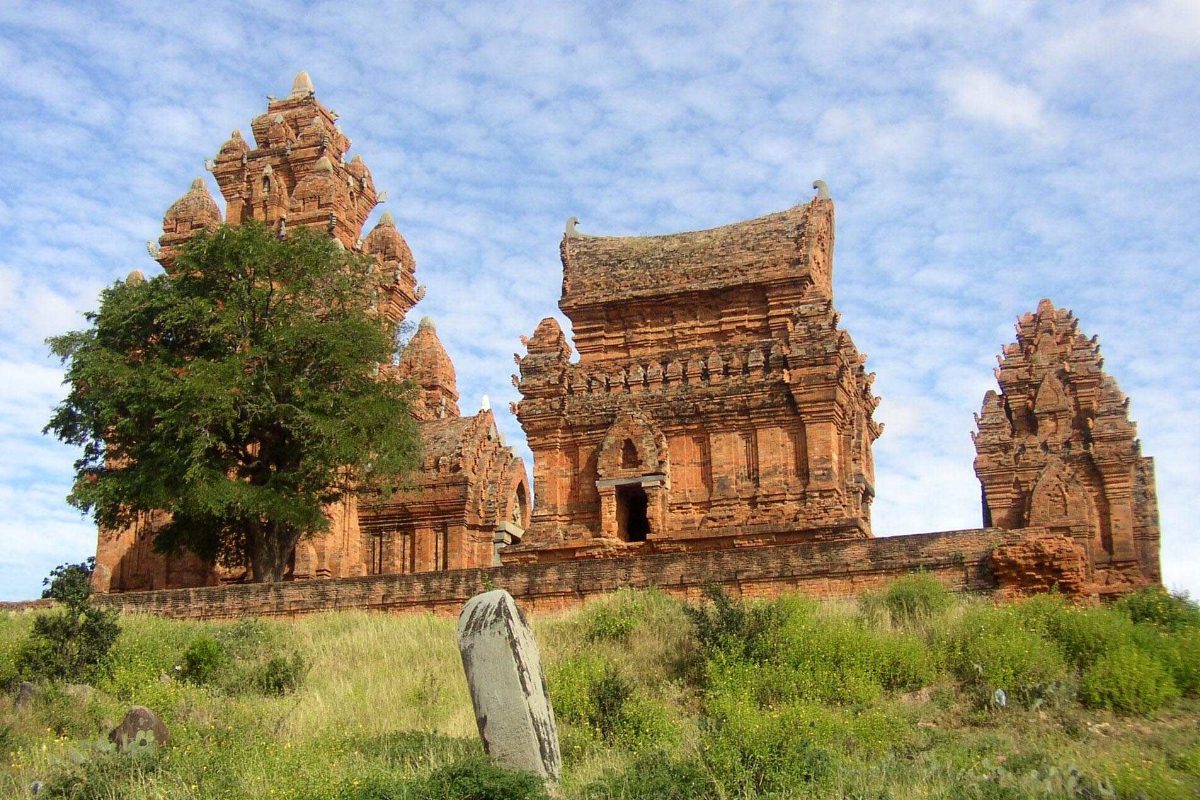
- The south-central coast: Po Klong Garai and Po Sah Inu towers show the heritage of Champa; Bani villages are best visited with a local guide.
Etiquette When Visiting
- Dress modestly: cover shoulders and knees; women may bring a scarf for mosques.
- Ask before photographing people, especially women and worshippers.
- Avoid visiting mosques during prayer times unless you are joining the prayer.
- Remove your shoes before entering mosques and homes.
Practical Information for Muslim Travellers
For the official Muslim population figures, mosques across the country, halal laws, the Global Muslim Travel Index ranking and airport prayer rooms, read our sister guide Islam in Vietnam: is Vietnam a Muslim-friendly country?. For food, see our list of halal restaurants in Saigon.
Meet Vietnam’s Muslim Communities with Saigon Muslim Tours
Our private tours from Ho Chi Minh City include halal meals and can include visits to mosques and Cham communities: see the Mekong Delta Muslim Tour 2 Days 1 Night, the Mekong Delta Muslim Tour 1 Day and the Ho Chi Minh Muslim Tour 3 Days, or ask us for a tailor-made itinerary.
Frequently Asked Questions about Vietnamese Muslims
1. Who are the Muslim people of Vietnam?
Most Vietnamese Muslims are Cham, an ethnic group of about 173,000 people (2024 survey) descended from the kingdom of Champa. They follow either mainstream Sunni Islam (Cham Muslims) or Cham Bani, a local form of Islam. Vietnam also has Muslims of Indian and Malay descent, a small number of ethnic Vietnamese Muslims and foreign residents.
2. Do ethnic Vietnamese Muslims exist?
Yes, but they are few. The great majority of Muslims in Vietnam are Cham. A small number of ethnic Vietnamese (Kinh) are Muslim, including converts, mainly in Ho Chi Minh City and An Giang.
3. What is the difference between Cham Islam and Cham Bani?
Cham Muslims follow Sunni Islam with five daily prayers and the Ramadan fast. Cham Bani follow a local tradition that mixes Islam with Cham custom: religious duties are carried out mainly by the clergy (Acar), and the fasting month, Ramưwan, is observed by the clergy on behalf of the community.
4. How many Cham Muslims are there in Vietnam?
The Ministry of Ethnic and Religious Affairs (formerly the Government Committee for Religious Affairs) counts about 30,000 Sunni Muslims and about 50,000 Cham Bani, more than 80,000 in total, still the latest official figures in 2026; the 2019 census recorded 70,934 followers of Islam.
5. Where can I visit a Cham Muslim village?
The easiest Cham Muslim villages to visit are around Chau Doc in An Giang, such as Chau Giang and Chau Phong, with mosques, stilt houses and weaving workshops. In Ho Chi Minh City, the Cham neighbourhood around Jamiul Anwar Mosque on Duong Ba Trac Street is best visited during the Ramadan food market.
6. What language do Cham Muslims speak?
Cham Muslims speak the Cham language and Vietnamese, and learn Arabic to read the Quran. Many have family, study or work links with Malaysia, and some speak Malay.
7. Siapakah umat Islam di Vietnam?
Kebanyakan umat Islam di Vietnam ialah orang Cham. Terdapat dua kumpulan utama: Cham Islam yang mengamalkan Islam Sunni mazhab Syafie, terutamanya di An Giang dan Ho Chi Minh City, dan Cham Bani di pantai tengah selatan. Jumlah umat Islam di Vietnam melebihi 80,000 orang.
Sources
- General Statistics Office of Vietnam – 2019 Population and Housing Census.
- Ministry of Ethnic and Religious Affairs and National Statistics Office – survey of the socio-economic situation of 53 ethnic minorities, 1 July 2024 (published July 2025), table 1.6.
- Tuoi Tre (Phu Nu) – Ho Chi Minh City Muslim community meeting, 6 February 2026.
- Nhan Dan, October 2022 – the Cham ethnic group (178,948 people).
- Government Committee for Religious Affairs – religion overview booklet (data to 31 December 2021, published August 2023).
- Quan ly Nha nuoc journal, September 2023 – Islam by province; Thanh Tra newspaper, November 2022 – An Giang Islamic community.
- Religious Studies Review (Vietnam), January 2026 – Muslims in Hanoi.
- Haw, S. (2017), “Islam in Champa and the making of factitious history”, Journal of the Royal Asiatic Society.
- Viet Nam News, February 2025 – Masjid Mubarak.
- Wikipedia: Cham people; Wikipedia: Islam in Vietnam.
Photos: Wikimedia Commons contributors (credited in each caption).